Author: Tyler Gordon, Co-CEO, BaseCamp Franchising
Published: July 21, 2026
Read time: 7 min read
Brand: Kid to Kid
When considering the investment profile of a Kid to Kid, it’s important to consider two questions. First, what does it cost to open a store? Second, what can I reasonably expect to earn? This guide answers both, using the numbers from Kid to Kid’s current Franchise Disclosure Document (FDD).
If you are evaluating Kid to Kid as a franchise opportunity, everything below comes from Item 7 and Item 19 of Kid to Kid’s 2026 FDD. You should read the FDD closely, build your own financial forecast, and talk with franchisees who are already running stores. Our franchise development team is also available to help at every step of that process.
What Is the Kid to Kid Franchise Cost?
The total investment to open a single Kid to Kid franchise ranges from $357,515 to $640,215, with a midpoint of $498,865, per Item 7 of Kid to Kid’s 2026 FDD. That range covers everything required to open your doors, including the franchise fee, store buildout, trade fixtures, technology, signage, opening inventory, and grand opening marketing.
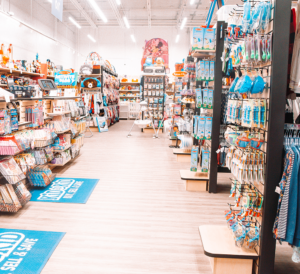
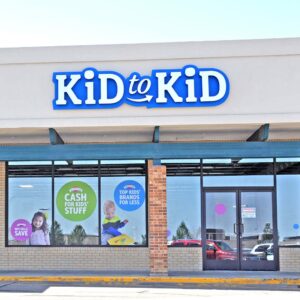
The spread in total project costs mainly comes down to real estate. A space with fewer buildout requirements and a larger share of landlord-funded tenant improvement dollars typically lands toward the low end. A space requiring higher construction costs, especially those funded by the tenant, will push costs higher. Converting an existing retail space into a Kid to Kid? The project cost will likely be lower. Subdividing a supermarket? The buildout cost will likely be higher. Kid to Kid’s new store team will help you evaluate every site that you consider, helping you go in eyes wide open and make the best possible decision.
| Select Project Costs | |
| Investment Item | Estimated Range |
| Franchise fee | $35,000 |
| Real estate improvements | $35,000 – $160,000 |
| Real estate deposit | $3,000 – $21,000 |
| Trade fixtures | $75,000 – $105,000 |
| BaseCamp Software Suite | $15,000 |
| Opening inventory | $70,000 – $90,000 |
| Grand opening promotion | $20,000 |
| Additional funds (first 3 months) | $40,000 – $67,500 |
Source: Item 7, Kid to Kid 2026 FDD.
Two things worth clarifying before you build your own forecast. First, the Item 7 range is a well-researched starting point, not a finished answer. A serious evaluation means running your own bottoms-up analysis specific to your market, lease, and operating plan. Second, these figures largely represent one-time costs. Once your store is open, key ongoing fees are a 5.0% royalty on gross sales and a 0.5% marketing fund fee.
Is $357,515 to $640,215 High for a Franchise Investment?
It depends on the comparison. Relative to a typical restaurant or fitness franchise, the Kid to Kid investment is generally lower. Relative to many home services franchises, where an owner can start out of a vehicle with minimal overhead, it is higher, mostly because of the physical retail space. Relative to a representative set of other brick-and-mortar retail concepts, Kid to Kid’s investment range sits broadly in line.
The more useful comparison is against what the business can earn, which we will cover later in this post.
How Do Franchisees Typically Fund Their Investment?
Most Kid to Kid owners finance a meaningful share of their startup costs rather than paying entirely out of pocket. To help with the financing process, Kid to Kid maintains relationships with SBA lenders familiar with our model. Kid to Kid requires a minimum net worth of $200,000 and at least $100,000 in liquid capital to qualify as a franchise candidate, a bar set in part to align with what SBA lenders will expect to see during underwriting. Once you sign a franchise agreement, our new store and finance teams will help you prepare a business plan and work through financing options. That way you walk into lender conversations prepared, not guessing.
What Can a Kid to Kid Franchise Owner Earn?
The project cost only tells half the story. Based on Item 19 of Kid to Kid’s 2026 FDD, here is the financial profile for Kid to Kid franchised locations that have been open and operating for a full year:
| System Average | Top Quartile | |
| Gross Sales | $1,017,375 | $1,607,276 |
| Net Income | $110,392 | $230,601 |
Source: Item 19, Kid to Kid 2026 FDD. Top quartile reflects the top 25% of reporting stores by sales.
To put those figures in context, at the system average, net income of $110,392 represents an unlevered yield of roughly 22% against the midpoint of the investment range of $498,865. Top quartile performance pushes that yield past 46%, more than double the system average.
These numbers represent real franchisees running real stores, the majority of whom had no retail experience before opening their first Kid to Kid. What the figures do not reflect, however, is passive ownership. Running a Kid to Kid is a seven-day-a-week retail business. The franchisees who land in the top quartile are not the ones who found the best corner location. They are the ones who out-execute their peers, day after day, on customer relationships, staffing, and store operations.
The Market Behind These Numbers
Kid to Kid’s founder puts it simply: kids grow faster than paychecks. Growing families need a steady supply of clothing, gear, and equipment, and Kid to Kid turns that ongoing need into a retail model built around buying and reselling quality items at 50 to 70% off original retail.
Demand in clothing resale is also remarkably resistant to economic cycles. When household budgets tighten, families do not stop buying clothes and gear for growing kids. They simply become more selective about where those dollars go, and resale is often the first place they look. That dynamic makes children’s resale a counter-cyclical business in a way that few retail categories can claim.
Demand does not pause, either. It resets with every seasonal change, every school year, every growth spurt, and every new sibling. According to ThredUp’s 2026 Resale Report, the U.S. secondhand apparel market grew 13% in 2025, and the secondhand apparel market in the U.S. is projected to reach $393 billion by 2030. Families are choosing resale earlier in their decision process, not as a last resort.
Founded in 1992, Kid to Kid has been supporting families and contributing to the growth in children’s resale for over three decades. Along the way, we’ve helped over 115 stores open and have honed our business model to deliver compelling value to both customers and franchisees alike.
What the Numbers Actually Mean for You
The investment range in Item 7 is real money, and it deserves scrutiny. Build your own model. Stress test that model against a below-average year. Speak with existing franchisees to get their perspective. Make sure you have adequate reserves before you open your doors.
It is also worth being honest with yourself about what kind of business this is. If you are looking for a passive investment that runs itself while you focus elsewhere, owning a Kid to Kid is not for you. If you are looking to build a business you can be proud to run for the next ten or twenty years, on terms grounded in real financial data rather than a sales pitch, Kid to Kid deserves a serious look.
Ready to Go Deeper?
If you would like to request Kid to Kid’s 2026 FDD, speak with existing franchisees, or ask our team about investment requirements, market availability, or the discovery process, we would love to hear from you. There is no pressure and no timeline, just a conversation about whether there is a strong mutual fit.
Reach out to our franchise development team to get started. Or, if you are still in early research mode, our investment overview and FAQ pages are good next reads.
About the Author:
LEGAL DISCLAIMER
Financial performance data sourced from Item 19 of the Kid to Kid 2026 Franchise Disclosure Document, franchised locations only, for the period November 1, 2024 through October 31, 2025. Investment figures sourced from Item 7 of Kid to Kid’s 2026 Franchise Disclosure Document. Results vary by location, operator, and market. A new franchisee’s results will likely differ from these results. This is not an offer to sell a franchise.