Tyler Gordon | Last Updated: May 29, 2026
Here’s a truth every parent already knows: kids grow faster than paychecks. You buy a pair of jeans in September. By November, they’re two inches too short. Multiply that across shoes, coats, pajamas, and school clothes, and keeping up with a growing child can feel genuinely relentless, especially when budgets are already stretched thin.
Children’s resale stores exist to solve that problem. They give families access to high-quality clothing and other items at prices that are actually sustainable – typically 50–70% below original retail prices. For parents, the appeal is immediate and real. For a business owner, that kind of genuine consumer demand represents a durable foundation from which to build.
But here’s the question that matters if you’re thinking about opening a children’s resale store: what separates stores that thrive from ones that don’t?
The stores that win big are the ones that figure out how to combine a high-quality, boutique-style customer experience with a high-volume, systems-driven operation on the back end. It’s resale without compromise. That combination – and the difficulty of building it – is what this post is about.
The Market Is Real and Growing Fast
Before getting into operations, it’s worth establishing why this moment in children’s resale is particularly compelling.
According to ThredUp’s 2026 Resale Report, the U.S. secondhand apparel market grew 19% in 2025 alone, outpacing broader retail clothing by 3.6 times. What’s more, the market is projected to reach nearly $80 billion by 2030. This isn’t a niche trend. It is a structural shift in how consumers shop.
Children’s resale sits at the center of that shift. Kids outgrow clothing faster than adults – and parents know it. The combination of rapid growth cycles, strong value consciousness, and increasing environmental awareness has created a customer base that isn’t going anywhere. In fact, it keeps getting bigger.
The potential is clear. The harder question is how you build a store that captures that opportunity.
What Thriving Stores Actually Look Like
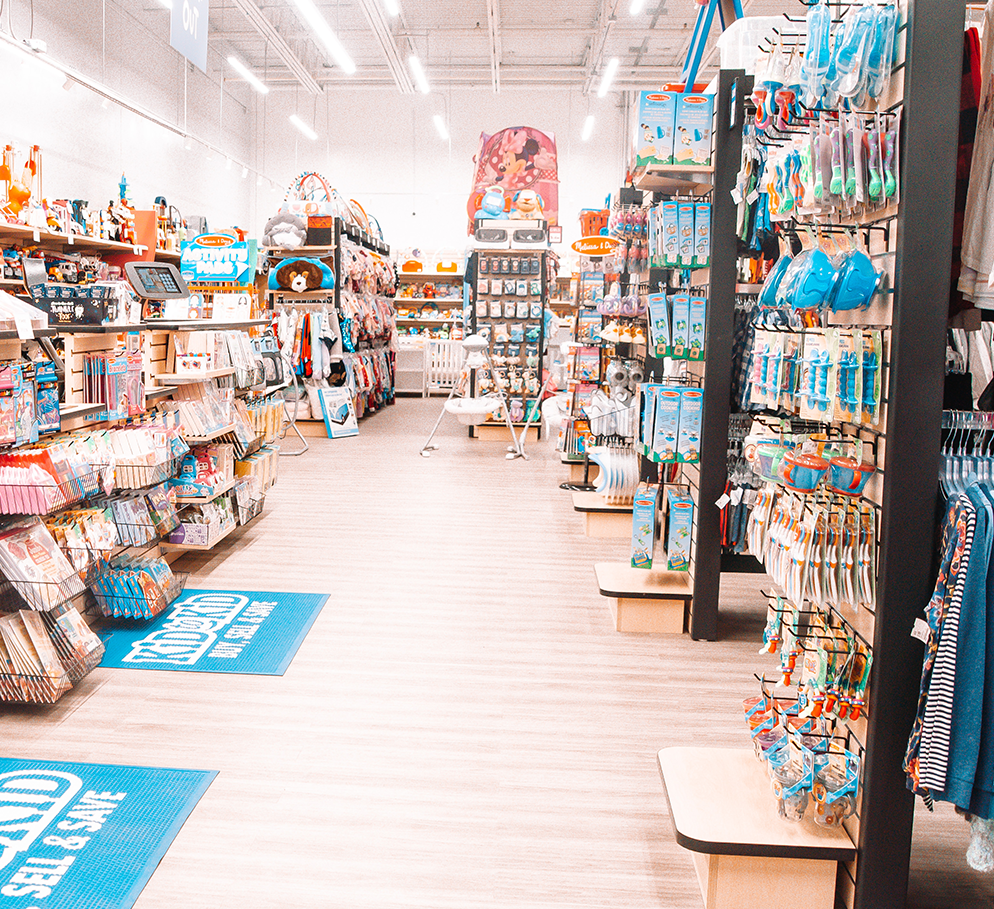
Walk into one of the best children’s resale stores in the country and you notice something right away. It feels upscale. The space is clean, organized, and visually engaging. The clothing is well-curated and neatly presented. Kids are engaged; parents are comfortable. The experience feels like a boutique – until you see the prices. Then it feels like the smartest shopping trip you’ve taken all year.
That’s the customer-facing side of the equation. It is genuinely important. A store that feels disorganized, cluttered, or low-end will struggle to retain customers regardless of pricing. The in-store experience drives repeat visits, word of mouth, and the vendor relationships that keep inventory fresh.
But here’s what the customer never sees: the back end of a successful children’s resale store runs nothing like a boutique. It runs like a well-oiled retail machine.
High-performing stores are constantly buying inventory from community members. They need to make fast, accurate pricing decisions across hundreds of unique items every shift. They’re managing inventory turnover with discipline – moving product quickly, marking down strategically, and keeping the floor fresh. They’re tracking which categories are selling, which are sitting, and how their numbers compare to their plan. Their teams are trained, motivated, and executing consistently.
The boutique feel on the floor is real. But it is produced by a high-volume, data-driven operation that knows exactly what success looks like and how to get there.
Why Building A Resale Machine From Scratch Is So Hard
Most people who want to open a children’s resale store can picture the customer experience they want to create. Very few have a clear picture of what it takes to run the back end.
Let’s be direct about what “starting from scratch” actually means:
- You’ll need a technology platform that can manage buying transactions, track inventory, and give you real-time data on store performance. Building or licensing that infrastructure takes time, money, and ongoing maintenance.
- You’ll need pricing systems that are fast enough to process high-volume buying and accurate enough to maximize product velocity and protect your margins. Pricing is a discipline that most independent operators develop slowly, through trial and error, often at significant cost. It’s also the first thing that walks out the door when the owner wants to take a vacation or retire.
- You’ll need to build your vendor pipeline – the community relationships that generate a consistent stream of quality incoming inventory. Without consistent vendor volume, you won’t have the product you need to match customer demand.
- You’ll need well-defined processes and training modules that translate into consistent team execution, day after day, across shifts you aren’t always there to oversee.
- You’ll need marketing that builds both sides of your business simultaneously – driving shoppers and vendors through the same front door.
These requirements aren’t impossible. But they are not simple, either. The independent operators who figure it all out typically do so over years, absorbing real financial costs and headache along the way. Many don’t survive long enough to get there.
What Kid to Kid Has Already Figured Out
Kid to Kid has been operating children’s resale stores since 1992. That’s more than 30 years of refinement across every dimension of the business – technology, pricing, operations, training, marketing, vendor development, and beyond.
The result is a franchise system built around the dual objective of delivering a boutique-quality customer experience while running a well-oiled, high-volume operation. Franchisees enter the system with proven operating systems, proprietary technology, structured training, and purpose-built marketing. They don’t start from scratch. They start with a playbook that took decades to build.
The result is a strong financial profile – one that matches the enduring value proposition to customers. According to Item 19 of Kid to Kid’s 2026 Franchise Disclosure Document, franchised locations that had been operating for a full year reported the following results:
| System Average | Top Quartile | |
| Gross Sales | $1,017,375 | $1,607,276 |
| Net Income | $110,392 | $230,601 |
That earnings potential compares to a total investment to open a Kid to Kid franchise of $357,515 to $640,215, per Item 7 of the Kid to Kid 2026 FDD. Included is everything required to open your doors: the franchise fee, lease improvements, fixtures, technology, signage, opening inventory, grand opening marketing, working capital, and beyond.
One Reality Worth Addressing
If you’re looking for a passive investment – a business that runs itself while you focus on other things – running a Kid to Kid, or any other children’s resale store, is not for you.
Children’s resale is a seven-day-a-week retail operation. The stores that perform at the top of the system are not there because they found the perfect location or caught a lucky break. They’re there because their owners stayed close to the business, invested in their teams, and executed consistently over time. That kind of engagement is what turns a good store into a great one.
The franchise model provides the systems, training, and infrastructure. The operator provides the energy and the commitment. Both are required. The right candidate will understand that reality and feel motivated, not daunted.
A Business Worth Building
There’s something worth naming at the end of this conversation, because it’s one of the reasons this business attracts the operators it does.
A well-run Kid to Kid isn’t just a financially successful business. It’s a lifeline for families in your community. It’s a place where parents who are stretched thin walk out feeling smart, not compromised. Where a single parent on a tight budget gets the same access to quality clothing, shoes, toys, and equipment as anyone else. That impact is real, and it repeats itself thousands of times a year in every store.
The operators who build the strongest Kid to Kid locations tend to be people who care about both sides of that equation: the financial performance and the community role. One reinforces the other. A store that genuinely serves its community builds the kind of customer loyalty and vendor trust that shows up in the numbers.
If you’re drawn to the idea of building a high-performing business that also does something meaningful – and you’re willing to put in the hard work to run it – children’s resale is worth taking seriously. And Kid to Kid has spent 30+ years building the infrastructure to help you do it right.
Ready to Learn More?
If you’d like to explore what Kid to Kid franchise ownership looks like in your market, reach out to our team. We’ll walk you through the Kid to Kid model in more detail, review our FDD, and connect you with existing owners. No pressure, no timeline – just an honest conversation about whether Kid to Kid is the right fit.
You can click HERE to reach our franchise development team.
Or, if you’re still in early research mode, Kid to Kid’s investment overview, in-store experience page, and owner testimonials are good next reads.
About the Author:
LEGAL DISCLAIMER
Financial performance data sourced from Item 19 of the Kid to Kid 2026 Franchise Disclosure Document, franchised locations only, for the period November 1, 2024 through October 31, 2025. Investment figures sourced from Item 7 of Kid to Kid’s 2026 Franchise Disclosure Document. Results vary by location, operator, and market. A new franchisee’s results will likely differ from these results. This is not an offer to sell a franchise.